 10% OFF
Finger Millet Flour (Ragi Atta)
About this product
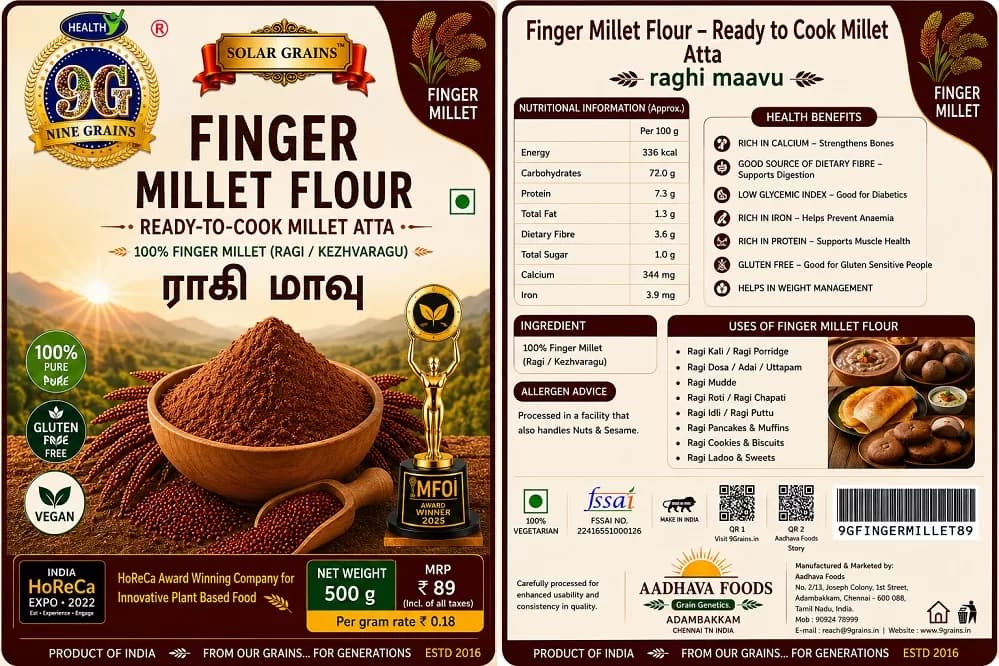
Ragi atta. Highest calcium grain, naturally gluten-free. 500g. Ready to Eat / Ready to Cook
FSSAI Certified
Lic. No. 22416551000126 · Food Safety & Standards Authority of India
Free Delivery
On orders ₹499+
7-Day Returns
Easy returns
Detailed Description
Our Finger Millet (Ragi) Flour is heat-dried for immediate use ,it has maximum calcium, iron and amino acids. Ragi is the calcium king of all grains at 344mg per 100g — surpassing milk and eggs.
Finger millet, popularly known as ragi in South India and mandua in the North, is a premier ancient
superfood deeply woven into India's seasonal culinary traditions. It stands out among all grains for its
unique ability to be adapted across different seasons—acting as a hydrating cooling agent in summer and
an energy-dense, warm staple in winter.
- ✓🩺 Key Health Benefits
- ✓Bone Density: High calcium and potassium prevent bone depletion and combat conditions like osteoporosis.
- ✓Diabetes Management: Its exceptionally low Glycemic Index (GI) slows down chemical starch digestion,
- ✓preventing post-meal spikes in blood sugar.
- ✓Anemia Reversal: High natural iron levels significantly boost hemoglobin counts, especially in developing
- ✓children and pregnant women.
- ✓Weight Optimization: The essential amino acid tryptophan naturally suppresses appetite by creating
- ✓ prolonged satiety
Gluten-Free: Completely safe for individuals suffering from celiac disease or gut-level gluten sensitivities.
Rich Nutritional Profile (per 100g)
Finger millet outclasses major commercial cereals like rice and wheat across almost all
micronutrient categories:
Calcium (344 mg): The highest calcium content of any cultivated cereal, offering roughly
three times the calcium of milk.
- ✓Dietary Fiber (15–20%): Contains a five-layered seed coat packed with non-starchy
- ✓polysaccharides that regulate digestion.
- ✓Protein (5–8%): Features a well-balanced profile of essential amino acids like methionine,
- ✓lysine, and threonine.
- ✓Low Fat (1–2%): Contains minimal fat, primarily composed of heart-healthy polyunsaturated fatty acids.
- ✓Iron & Minerals: Abundant in natural iron, potassium (408 mg), magnesium, and zinc.
- ✓ ☀️ Seasonal Usage and Traditional Indian Preparations
Traditional Indian communities dynamically adjust how they process and consume finger millet
based on the local climate and seasonal demands.
[ Finger Millet / Ragi / Mandua ]
│
┌──────────────┴──────────────┐
▼ ▼
[ Summer / Monsoon ] [ Winter ]
• Ragi Ambli / Koozh • Ragi Roti
• Fermented Buttermilk • Mandua ki Roti
• Body Cooling / Hydration • Warm Ghee & Jaggery Halwa
1. Summer & Monsoon (March to September)
Despite being dense, finger millet has natural cooling properties (Sheeta Virya in Ayurveda)
when mixed with dairy or fermented.
- ✓Ragi Ambli / Koozh (South India): Ragi flour is cooked in water, cooled down, mixed with sour buttermilk,
- ✓onions, and curry leaves, and left to ferment overnight. This probiotic drink cools body temperature and
- ✓restores vital electrolytes lost to heat sweat.
- ✓Ragi Mudde / Sankati (Karnataka & Andhra Pradesh): Steam-cooked ragi flour balls eaten during
- ✓hot sowing seasons by farmers. It is typically paired with watery, cooling yogurt or vegetable sambar
- ✓ to provide sustained energy for manual field labor without bloating.
2. Winter (October to February)
During the cold dry months, ragi is prepared using heat-inducing dry-roasting and baking methods to
stimulate digestive fire (Agni).
- ✓Mandua ki Roti (North India/Uttarakhand): Thick, hand-patted flatbreads cooked over clay tavas
- ✓ and topped generously with fresh ghee. The grain's complex carbohydrates digest slowly, steadily keeping the core body warm.
- ✓Ragi Halwa / Laddoos: Roasted ragi flour mixed with dry fruits, ginger powder, and melted jaggery.
- ✓This heavy, nutrient-dense sweet protects the joints from seasonal winter aches and keeps seasonal infections away.
- ✓Malted Ragi Porridge (Infant/Weaning Food): Sprouting (malting) the grain during winter increases
- ✓the availability of vitamin C and breaks down complex starches into easily assimilable elements for young children
- ✓Key Health Benefits for Indian Consumers
Nutrient / Property
Health Impact
Why It Matters for Indians
High Calcium
Fortifies bone density.
Contains roughly three times more calcium than milk, serving as an excellent plant-based
source for growing children and preventing osteoporosis in the elderly.
Low Glycemic Index (GI)
Stabilizes blood sugar.
Packed with polyphenols and complex carbs that digest slowly, preventing sudden
insulin spikes for individuals managing Type-2 diabetes.
Rich in Iron
Boosts hemoglobin levels.
Helps combat high rates of iron-deficiency anemia, particularly among
Indian women and young children.
High Dietary Fiber
Promotes fullness and gut health.
Supports healthy weight management by suppressing unnecessary
snacking urges and improves overall digestion.
Gluten-Free Protein
Easily digestible protein source.
Naturally contains essential amino acids like tryptophan and methionine,
offering high-quality energy without triggering gluten allergies.
Essential Rules for Storing Millet Flour
- ✓Cool and Dry Location: Store the flour away from direct sunlight, stove heat, and moisture-prone areas like the sink.
- ✓Airtight Glass or Steel Containers: Move the flour out of plastic store packaging into tightly sealed containers to
- ✓ block humidity and insects.
- ✓Keep Implements Dry: Always use a completely dry stainless steel spoon to scoop the flour to prevent mold growth.
Storage Life and Preservation Methods
- ✓Room Temperature (1 to 2 Months): Best for small quantities inside a dark pantry cupboard during dry seasons.
- ✓Refrigeration (3 to 6 Months): Highly recommended during hot, humid Indian summers and monsoons to
- ✓prevent the natural oils from turning rancid.
- ✓Freezing (Up to 1 Year): Perfect for bulk purchases; pack the flour into heavy-duty freezer bags,
- ✓press out all air, and seal completely.
- ✓
Identifying Spoiled Flour
- ✓Sour or Musty Smell: Fresh ragi has a sweet, earthy, or nutty aroma; an oil-like, sour, or
- ✓ stale smell means it has turned rancid.
- ✓Clumping and Moisture: Small hard lumps or web-like structures indicate moisture
- ✓ exposure or insect infestation.
- ✓Bitter Aftertaste: If your cooked rotis or porridge taste unusually bitter, the flour has
- ✓degraded and should be discarded.
Customer Reviews
No reviews yet. Be the first to share your experience!
Please login to write a review. Only verified purchasers can submit reviews.