 10% OFF
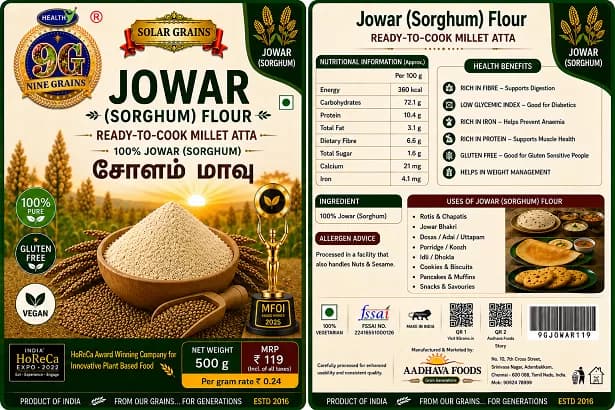
Jowar Flour / Nattu Cholam Maavu (Sorghum Atta)
About this product
Pure sorghum (jowar/cholam) atta. Gluten-free, high protein, great for rotis. Once a Staple food of the society . Its full of starch as allowed to grow fully. Sweet Corn is full of sugar since harvested prematurely.
FSSAI Certified
Lic. No. 22416551000126 · Food Safety & Standards Authority of India
Free Delivery
On orders ₹499+
7-Day Returns
Easy returns
Detailed Description
The Original Staple
Before the Green Revolution of the 1960s heavily promoted water-intensive wheat and rice, Jowar (Sorghum) was a primary staple crop across India's vast semi-arid regions.
- ✓Climate Resilience: It thrived naturally in dry zones because it requires minimal water and tolerates extreme heat.
- ✓Dietary Backbone: For centuries, it served as the daily source of energy for farming communities in central and western India, where irrigation was scarce.
Proven Health Benefits
Jowar is recognized as a nutritional powerhouse with several distinct health advantages:
- ✓Naturally Gluten-Free: It is an excellent, safe alternative for individuals dealing with celiac disease or gluten insensitivity.
- ✓High in Dietary Fiber: The rich fiber content slows down digestion, keeps you full longer, and supports optimal gut health.
- ✓Low Glycemic Index (GI): It prevents sudden spikes in blood sugar levels, making it highly recommended for managing diabetes.
- ✓Rich in Essential Minerals: Packed with plant-based iron, magnesium, copper, and calcium to support bone strength and oxygen regulation.
- ✓Packed with Antioxidants: Contains phytochemicals that help reduce chronic inflammation and lower the risk of cardiovascular diseases.
Culinary Uses Across India
Jowar adapts seamlessly to distinct regional culinary traditions across the country:
Western India (Maharashtra, Gujarat, Rajasthan): It is most famously used to make
Bhakri or Rotla—thick, unleavened flatbreads patted by hand and roasted on clay griddles (tawas). It is also popped like popcorn to make Jowar Dhani during festivals.
South India (Karnataka, Andhra Pradesh, Telangana): Used to make Jolada Roti. In these regions, grains are also broken down into rava (semolina) to prepare savory breakfast staples like Upma, Idlis, and Dosas.
Central India (Madhya Pradesh): Ground into flour for thick porridges, or mixed with legumes to make local savory steamed cakes.
- ✓
Utility & Simplicity in Daily Cooking
Incorporating Jowar into a modern kitchen is incredibly straightforward due to its versatile nature:
- ✓Easy Substitution: You can easily swap 20% to 50% of regular wheat flour with Jowar flour in your daily chapati dough without drastically changing the texture.
- ✓No-Fuss Binder: Because it lacks gluten, adding warm water while kneading helps activate the natural starches, making the dough pliable and easy to roll.
- ✓Multi-Product Variety: It is commercially available in multiple easy-to-use forms including whole grains, fine flour, semolina (rava), and ready-to-eat flakes
- ✓
Seasonal usage in India
While jowar is available year-round, its consumption pattern traditionally shifts across Indian seasons due to its unique thermal properties:
❄️ Winter (November to February): This is the peak consumption period for Jowar. Because it is dense and provides sustained energy, heavy flatbreads like Bhakri or Rotla are eaten hot with clarified butter (ghee), jaggery, and spicy garlic chutneys. It helps maintain body warmth and staves off winter sluggishness.
☀️ Summer (March to June): In its heavy flatbread form, jowar can be slightly heating for the body. Therefore, summer preparations shift toward cooling liquids. It is commonly fermented overnight with buttermilk, roasted cumin, and mint to create refreshing summer drinks like Ambali or Rabdi, which prevent heatstroke and dehydration.
🌧️ Monsoon (July to October): Freshly harvested tender green jowar stalks (Hurda or Ponkh) arrive in markets. These juicy grains are roasted over charcoal and eaten fresh with sesame or peanut chutney. It acts as an easily digestible snack during humid months when digestive systems naturally slow down.
Age-Wise Dietary Usage
Jowar can be introduced at almost any stage of life, provided it is prepared in a texture suitable for that specific age group:
👶 Infants (6 to 12 Months)
Form: Sprouted Jowar Porridge (Sari or Sattu).
Usage: Sprouting the grain reduces phytates, making the iron and calcium much easier for an infant's developing gut to absorb. Cook it thoroughly with water or breastmilk into a smooth, easily swallowable paste.
🧒 Growing Children & Teenagers (1 to 18 Years)
Form: Jowar flakes, pancakes, dosas, and homemade savory snacks.
Usage: Provides a steady release of glucose to power school sports and study sessions. The high calcium and phosphorus support rapid bone development during growth spurts.
🧑 Adults (19 to 59 Years)
Form: Traditional Bhakri, Jolada Roti, or multi-grain chapati blends.
Usage: Excellent for sedentary working professionals. The high fiber content manages cholesterol levels, prevents weight gain, and reduces the risk of lifestyle disorders like Type 2 diabetes.
🧓 Senior Citizens (60+ Years)
Form: Jowar Upma, soft porridge, or light Idlis.
Usage: Aging individuals often experience weakened digestion and joint issues. Soft-cooked jowar meals are easy on the stomach, combat chronic constipation, and provide plant-based iron to prevent age-related anemia.
- ✓Nutritional Value of Jowar (per 100g)
- ✓Jowar is a nutrient-dense grain that offers a well-balanced profile of macronutrients and essential micronutrients. Below is the average nutritional breakdown for 100 grams of whole grain jowar:
- ✓Nutrient Approximate Value
Energy 349 kcal
Carbohydrates 72.6 g
Dietary Fiber 10.2 g
Protein 10.4 g
Fat 3.4 g
Iron 4.1 mg
Calcium 28 mg
Phosphorus 287 mg
Potassium 350 mg
Customer Reviews
No reviews yet. Be the first to share your experience!
Please login to write a review. Only verified purchasers can submit reviews.